'/%3E%3C/svg%3E)

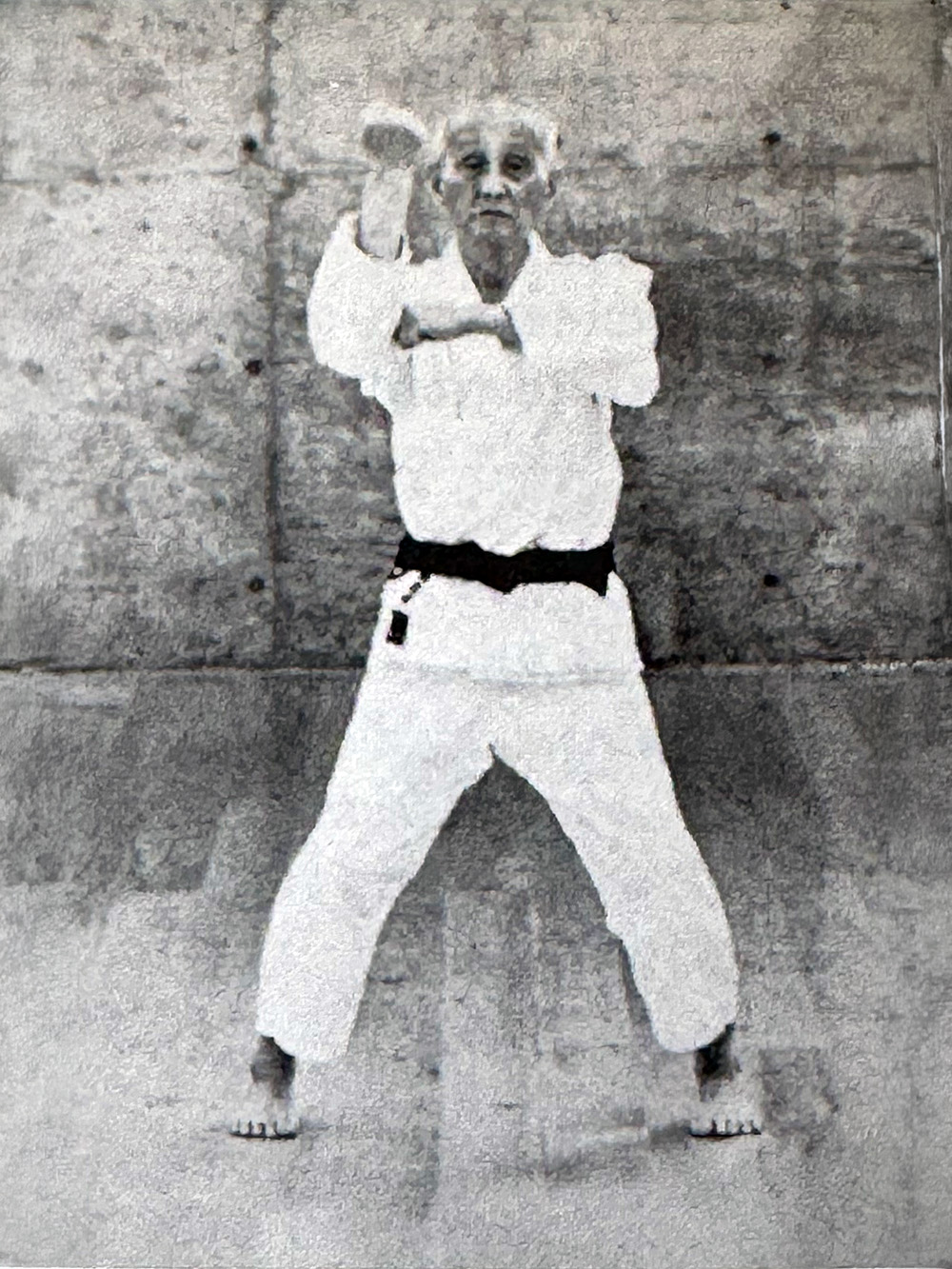
Hironori Ōtsuka named his style of karate Wadō-ryū — “the way of harmony.” With this name, he expressed his vision of the deeper purpose of karate practice: to cultivate a state in which conflict and violence become unnecessary.
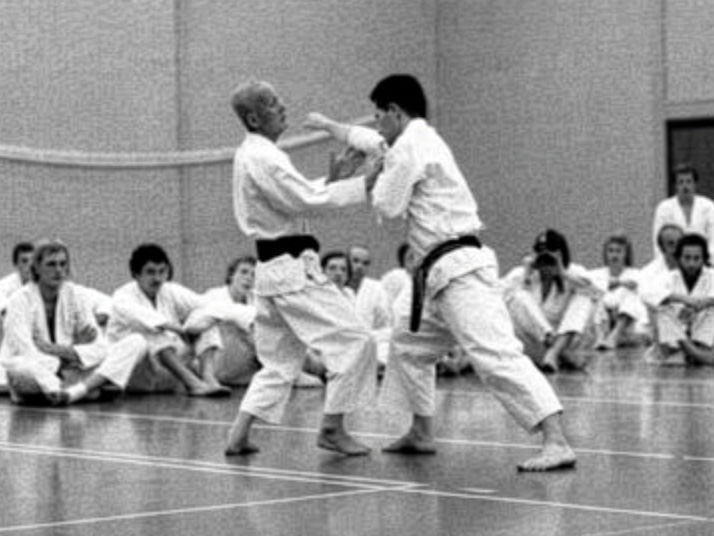
This philosophy is also reflected in the technical characteristics of Wadō-ryū. Ōtsuka developed, for example, taisabaki (body evasion) principles that emphasize moving off the line of attack while simultaneously blocking or redirecting, thereby reducing the need to meet force with force.
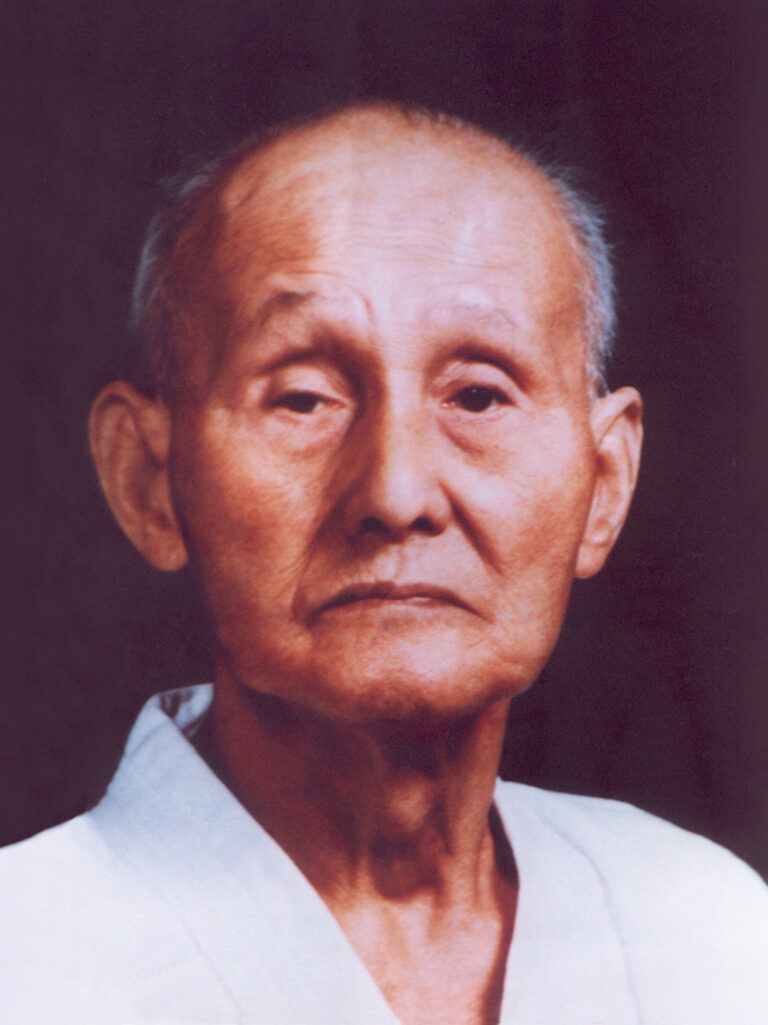
Hironori Ōtsuka (born June 1, 1892) was one of Gichin Funakoshi’s most promising and closest students during his early years in Tokyo. Around the turn of the 1930s, Ōtsuka parted ways with Funakoshi and began developing his own approach, which later became known as Wadō-ryū. The exact founding date of Wadō-ryū is difficult to define, as different sources provide varying accounts. However, by 1929 Ōtsuka had already defined most of the technical foundation of his system and had registered as a member of the Nippon Kobudō Shinkō Kai (Society for the Promotion of Japanese Classical Martial Arts).
In May 1934, his karate was officially registered as an independent style under the name Dai Nippon Karate Dō Shinkō Club. At this point, Ōtsuka closed his medical clinic and fulfilled his long-held ambition, pursued since 1919, of becoming a full-time karate instructor.
In 1938, the Dai Nippon Butoku Kai awarded Ōtsuka the title of “Renshi-go”. In the same year, his style was registered under the name Shinshū Wadō-ryū. In March 1939, the Dai Nippon Butoku Kai required all martial arts styles to formally register their names. Ōtsuka registered his system as Wadō-ryū. Other styles registered at the same time included Shōtōkan-ryū, Gōjū-ryū, and Shitō-ryū, among others.
In 1942, Ōtsuka was awarded the title of “Kyōshi-go” by the Dai Nippon Butoku Kai, and in 1944 he was appointed head instructor of karate in Japan. After the end of World War II in 1945, martial arts training was prohibited by the American occupation authorities. Following the signing of the peace treaty between Japan and the United States in 1951, martial arts practice was again permitted. This led to the first post-war martial arts demonstrations, and in 1955 the first All-Japan Wadō-ryū Championships were held.
The way to Europe and Finland
Wadō-ryū was introduced to Europe in 1964 by three instructors from Japanese universities: Tatsuo Suzuki, Tōru Arakawa, and Hajime Takashima, who came to present Wadō-ryū karate. The following year, in 1965, Tatsuo Suzuki returned to Europe to continue teaching Wadō-ryū, and was soon followed by other senior instructors such as Teruo Kono, Yutaka Toyama, Atsuo Yamashita, and Masafumi Shiomitsu.
Suzuki also introduced Wadō-ryū to Finland, where it has remained one of the most widely practiced styles. Today, approximately twenty clubs under the Finnish Karate Federation practice Wadō-ryū karate. In addition, there are several clubs outside the FKF that practice Wadō-ryū, primarily under the direction of Masafumi Shiomitsu.
Finnish Wadō-ryū karate has also been influenced by other senior instructors over time. In the late 1980s and early 1990s, Rob Zwartjes (7th dan) visited Finland on several occasions and had a significant impact on training. During the 1990s, cooperation also began with Shingo Ōgami (7th dan), based in Sweden, marking a gradual shift away from the direct influence of Tatsuo Suzuki’s line.
Since the passing of Hironori Ōtsuka in 1982, Wadō-ryū has split into several groups worldwide. Today, the Wadōkai organization, represented by Shingo Ōgami, is estimated to encompass around 90% of Wadō-ryū practitioners globally. Wadōkai is also recognized by the Japan Karatedō Federation and the World Karate Federation.
Alongside Wadōkai, there are smaller organizations such as Tatsuo Suzuki’s line and the group led by Hironori Ōtsuka’s son, Jirō Ōtsuka. In Finland, the latter is represented by the Finnish Wadō-Ryū Karate Federation, which has frequently invited Masafumi Shiomitsu to teach in Finland.
Being natural is important
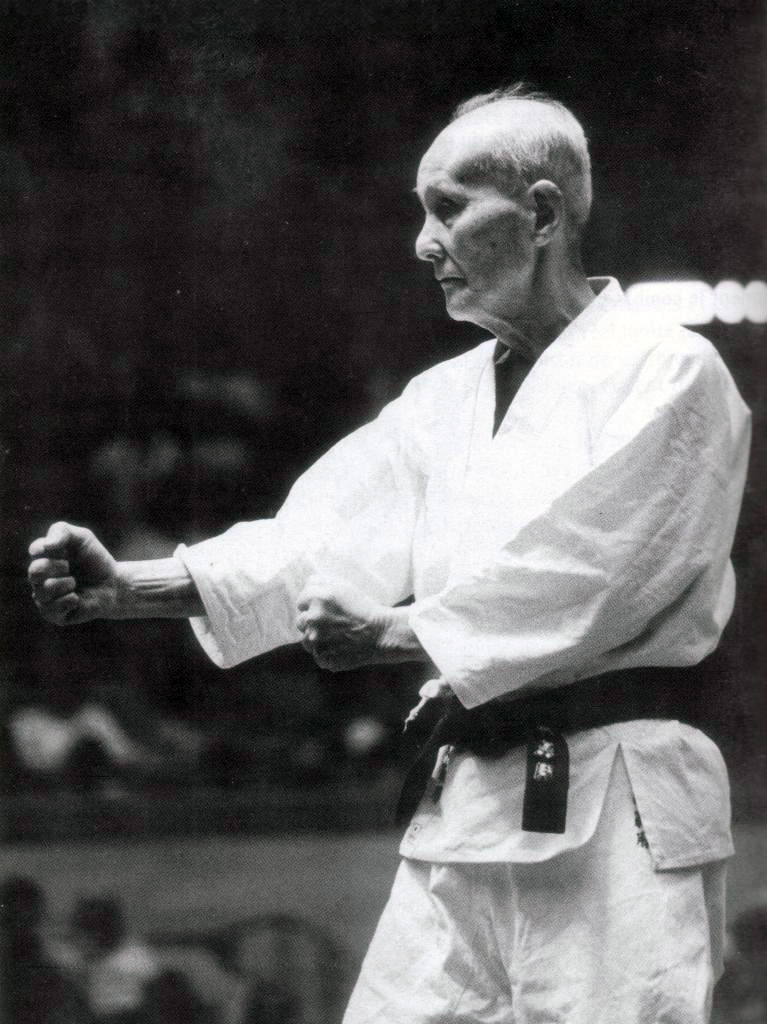
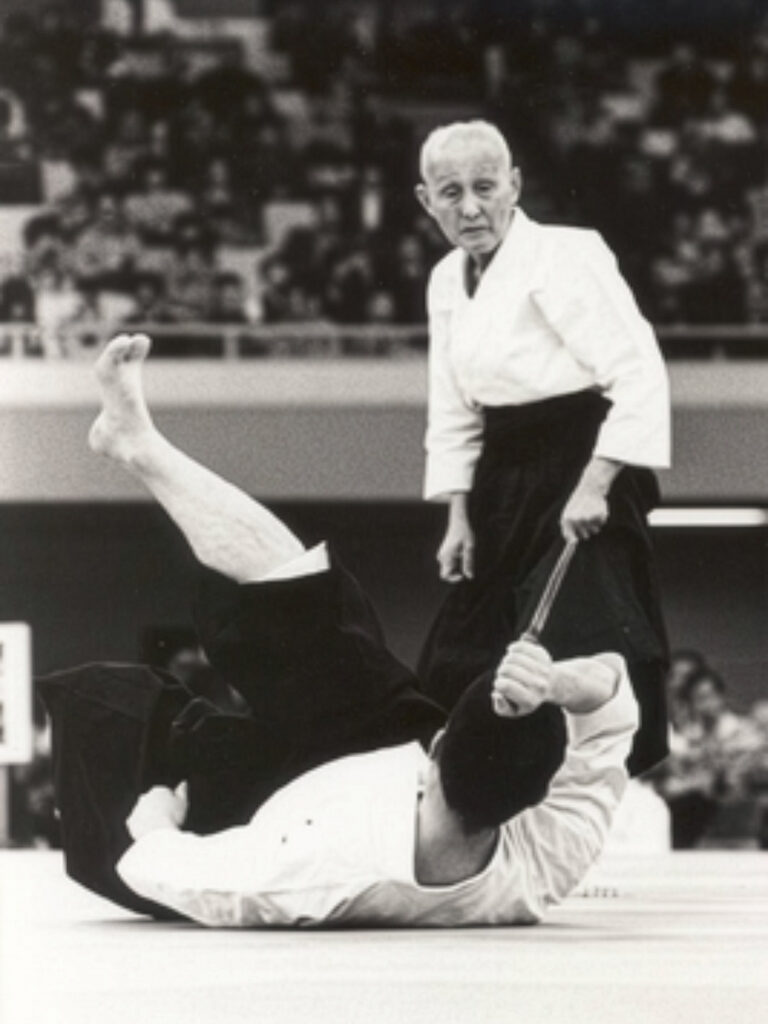
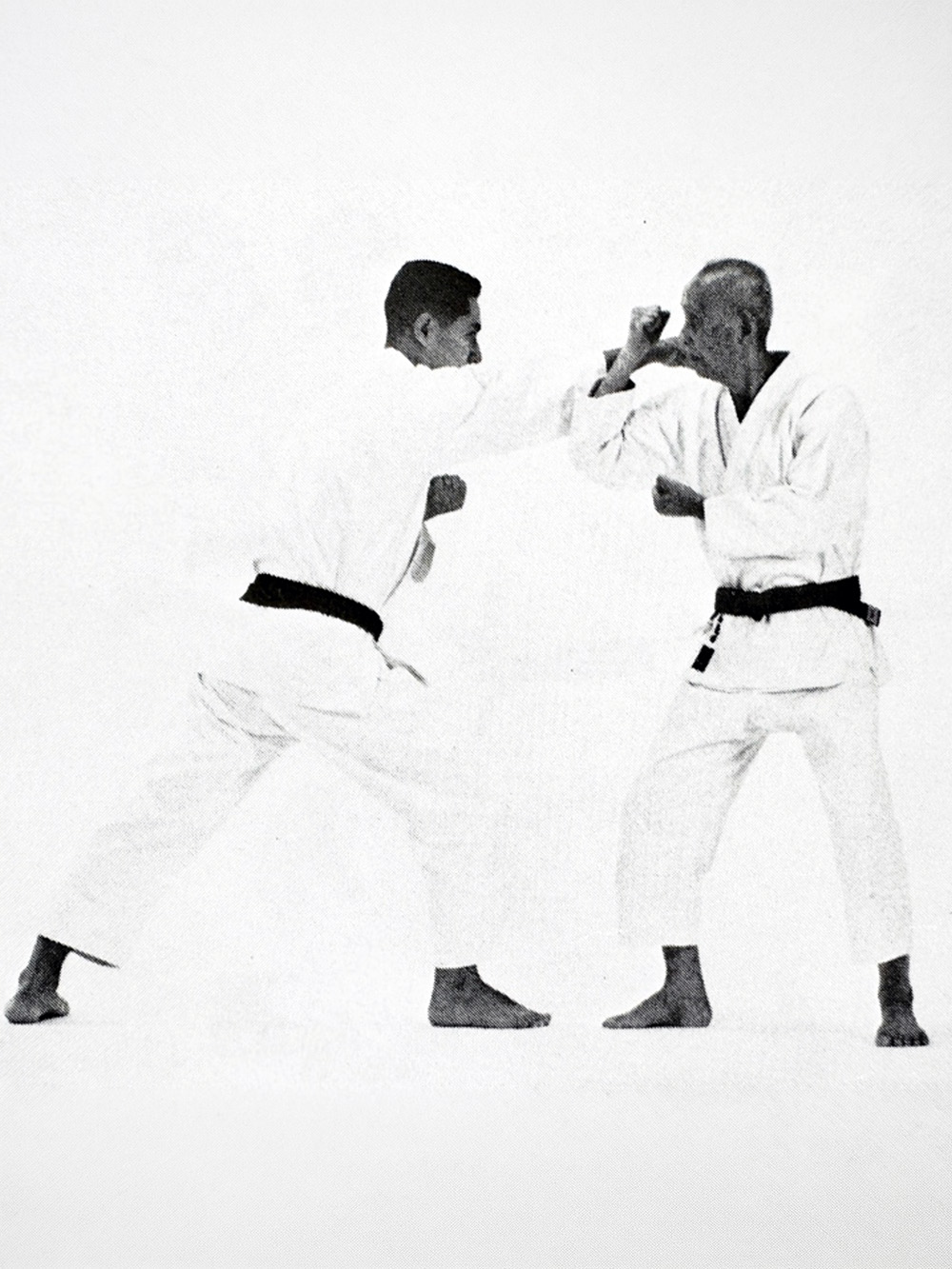
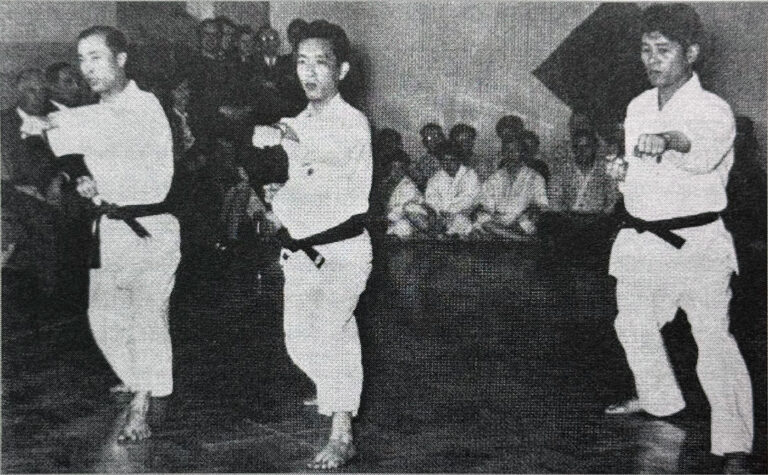
Wadō-ryū as a style is characterized by its natural and relaxed approach to movement. Maintaining relaxation is essential, and stances are generally higher compared to many other karate styles. Lower stances often require a different method of generating power, which can introduce unnecessary muscular tension.
The kime phase, or moment of focus, in Wadō-ryū techniques is brief. A punch begins in a relaxed state, with only minimal tension needed to guide direction and control movement. A sharp, short application of power occurs only at the very end of the technique, after which the body immediately returns to a relaxed state.
Wadō-ryū places strong emphasis on eliminating unnecessary movement. Techniques are performed as simply and efficiently as possible, from the initial position to completion. As a result, movements appear direct and economical, and compared to the larger, more expansive motions of styles such as Shōtōkan, Wadō-ryū may appear more subtle or understated.
Hironori Ōtsuka’s background in Shindō Yōshin-ryū jūjutsu significantly influenced the development of Wadō-ryū karate, particularly in the incorporation of certain grappling principles and controlling techniques. A key characteristic of Wadō-ryū is the avoidance of forceful collisions, especially in blocking techniques, combined with the use of taisabaki (body evasion). In many cases, the direction of the attack is utilized by aligning blocks with the line of attack—such as parrying a straight punch while simultaneously moving off the center line (nagashi-uke). Evasion is typically performed forward and diagonally, allowing for simultaneous counterattacks. This principle is developed extensively in Wadō-ryū’s fundamental partner exercises, Kihon Kumite, which clearly express the core characteristics of the style.
The natural and efficient movements of Wadō-ryū are also gentle on the practitioner’s body. When performed correctly, techniques place minimal stress on the joints and avoid heavy impact, helping to prevent unnecessary injuries and allowing for long-term practice of the art. A notable example of this longevity is the founder of Wadō-ryū, Hironori Ōtsuka, who passed away on January 29, 1982 at the age of 89. He remained active in budō throughout his life, practicing martial arts for approximately 84 years.
The katas retained their original names
When parting ways with Gichin Funakoshi, Hironori Ōtsuka chose to preserve the original Okinawan names of the kata. He also trained in Tokyo under Chōki Motobu, who emphasized the traditional method of kata execution, and studied with Kenwa Mabuni in Osaka, the founder of Shitō-ryū, further enriching his understanding of karate.
Wadō-ryū kata, like the style itself, are characterized by simplicity and efficiency, and are therefore not primarily designed for visual impact. As a result, Wadō-ryū is often underrepresented in international all-style kata competitions. The kata are largely similar to those found in Shōtōkan, although Wadō-ryū contains a smaller overall number. The main differences lie in the application and height of techniques, particularly blocks: many middle-level blocks in other styles are performed as upper-level blocks in Wadō-ryū.
Hironori Ōtsuka’s personal favorite kata was Naihanchi, which he was once honored to perform for the Emperor of Japan.
While Wadō-ryū may not stand out in kata competition, it demonstrates considerable strength in kumite (sparring). Its direct and efficient movements, refined use of taisabaki, and distinctive timing make it particularly well suited to modern competitive fighting situations.
Translated from the original text by Yrsa Lindqvist